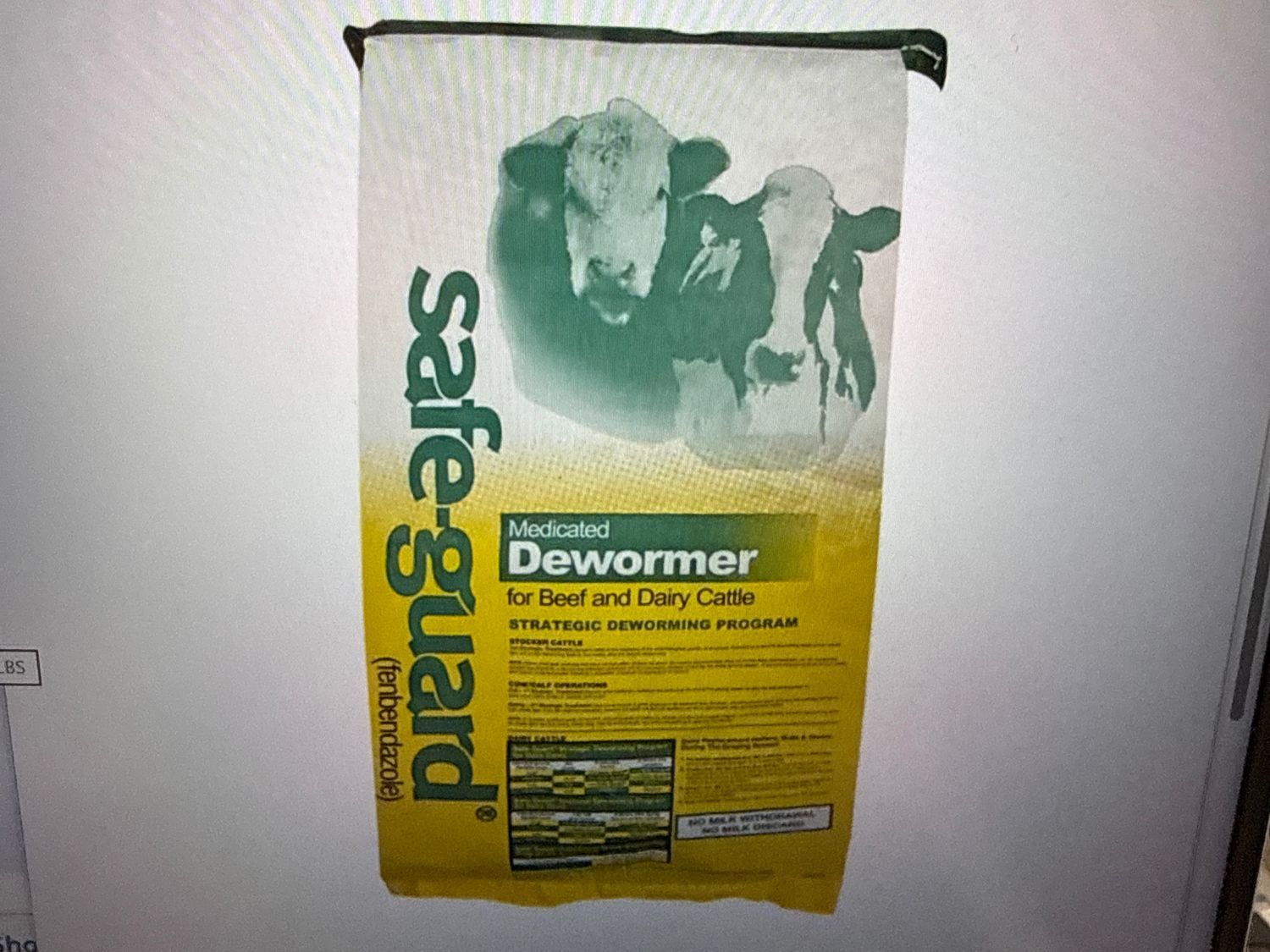
25# SAFEGUARD WORMER
$129.29
In stock: 2 available
Product Details
The Prairie Pride 25 lb Safeguard Pellets are formulated for horses, beef & dairy cattle, swine, and turkeys. For use as a top dress or included in ration, species variable.
- Multi-species medicated dewormer for equine, dairy cattle, beef cattle, swine, turkeys, hoofed wildlife and zoo animals
- No milk withdrawal in dairy cattle
- The only FDA approved ingredient to treat all stages of encysted small strongyles
- Made in the USA
- 25 lb bag
Details
- Alfalfa-based pellets let you feed and deworm in a single step.
- 5 mg fenbendazole per kg body weight in a 1-day treatment.
- 1 lb of pellets per 1,000 lbs of cattle.
- Made for beef and dairy cattle.
- Used for the removal and control of lungworms, stomach worms, and intestinal worms.
Safe-Guard 0.5% Alfalfa-Based Pellets Top Dress is a medicated (fenbendazole) dewormer for beef and dairy cattle. For beef and dairy cattle, the alfalfa-based pellets are used for the removal and control of lungworms, stomach worms (barberpole worms, brown stomach worms, small stomach worms), and intestinal worms (hookworms, thread-necked intestinal worms, small intestinal worms, bankrupt worms, nodular worms).
Specifications
| Item Number | 1728246 |
|---|---|
| Farm Animal Type | Cattle |
| Made In | United States |
| Lifestage | Adult, All Lifestages |
| Food Form | Pellets |
Precautions
Withdrawal Periods and Residue Warnings: Milk taken during treatment and for 60 hours after the last treatment must not be used for human consumption. Cattle must not be slaughtered for human consumption within 13 days following last treatment with this drug product. Not for use in beef calves less than 2 months of age, dairy calves, and veal calves. A withdrawal period has not been established for this product in pre-ruminating calves.
Warnings: Keep this and all drugs out of the reach of children. Not for use in humans. The Safety Data Sheet (SDS) contains more detailed occupational safety information. For customer service, adverse effects reporting, and/or a copy of the SDS, call 1-800-211-3573. For additional information about adverse drug experience reporting for animal drugs, contact FDA at 1-888-FDAVETS, or http://www.fda.gov/reportanimalae.
Other Warnings: Parasite resistance may develop to any dewormer, and has been reported for most classes of dewormers. Treatment with a dewormer used in conjunction with parasite management practices appropriate to the geographic area and the animal(s) to be treated may slow the development of parasite resistance. Fecal examinations or other diagnostic tests and parasite management history should be used to determine if the product is appropriate for the herd, prior to the use of any dewormer. Following the use of any dewormer, effectiveness of treatment should be monitored (for example, with the use of a fecal egg count reduction test or another appropriate method). A decrease in a drug’s effectiveness over time as calculated by fecal egg count reduction tests may indicate the development of resistance to the dewormer administered. Your parasite management plan should be adjusted accordingly based on regular monitoring.
Disclaimers
Consult your veterinarian for assistance in the diagnosis, treatment, and control of parasitism.
Customer reviews
Reviews only from verified customers
No reviews yet. You can buy this product and be the first to leave a review.
Save this product for later
25# SAFEGUARD WORMER
Display prices in:USD